🏷️ REFLUX SUPPORT SPECIAL

up to 50% OFF with FREE GIFTS

00
HRS
00
MIN
00
SEC

7 Reasons Nothing You’ve Tried Has Stopped the Nighttime Burn — And What Finally Does

Read this BEFORE you buy another roll of chalky tablets or box of acid reducers.

Compared on Vila Chalky antacids Acid reducers
Magnesium forms 7both jobs1neutralize only0
Feeds the muscle 5 absorbing forms
Settles on contact citrate & oxide
A daily mineral

*Forms are those printed on each product's panel. Some antacids contain a single magnesium form built to neutralize on contact; acid reducers contain none.

TLDR: everything else works on the acid — neutralize it or turn it down. Only one of these feeds the muscle that is supposed to keep it where it belongs 👇

1. Everything you’ve tried works on the acid. Nothing has worked on the door.
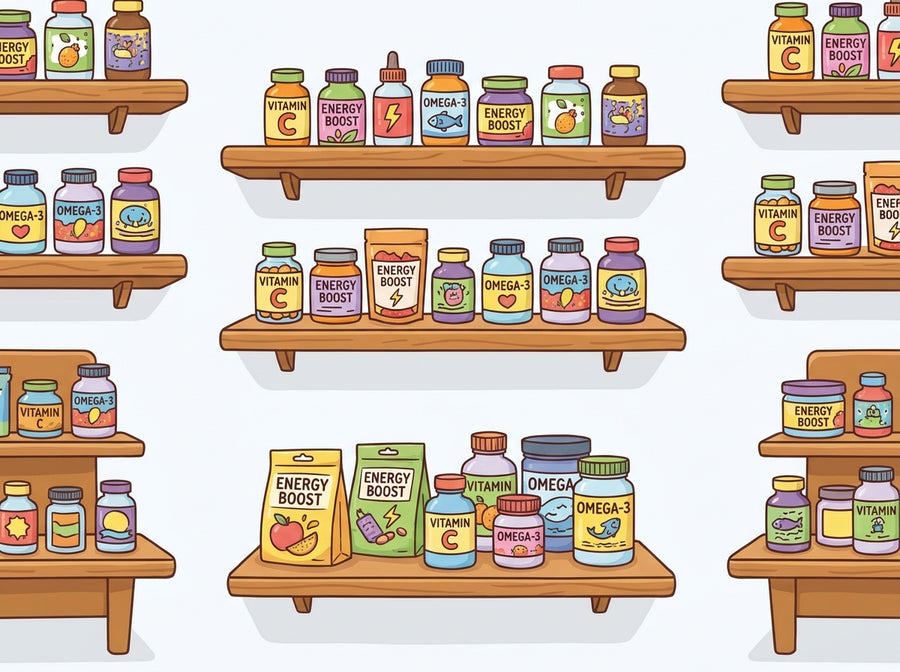
Everything you’ve tried works on the acid. Nothing has worked on the door.

Line them up and they all do one of two things. The chalky tablets neutralize acid that has already splashed where it should not be — finished working within the hour. The acid reducers turn the tap down at the source.

Neutralize it, or make less of it. Every product on that shelf is one of those two moves.

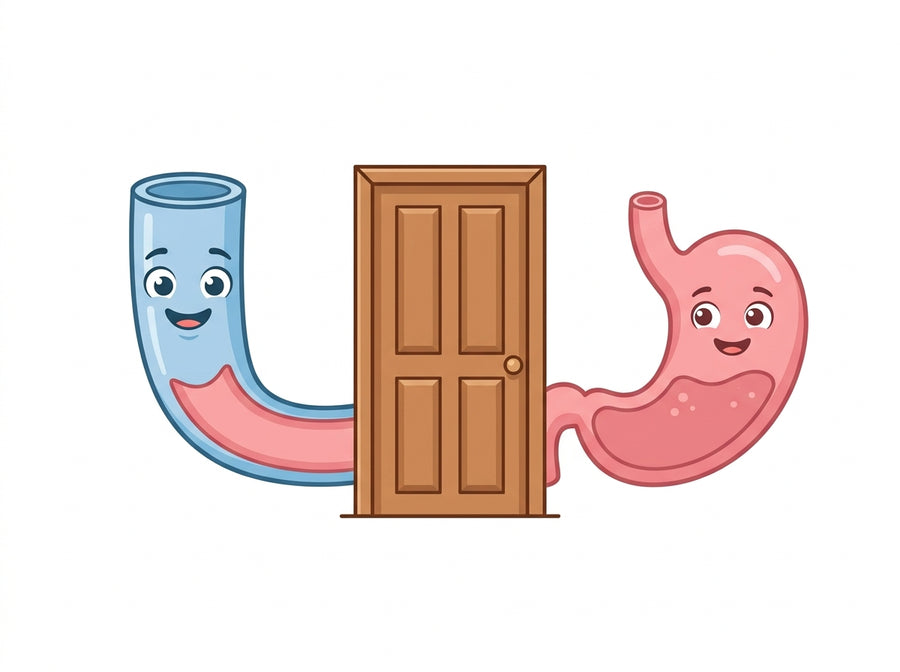
But there is a third piece nobody sells at that counter: the door that is supposed to keep the acid where it belongs in the first place. If the door does not seal, even a normal, healthy amount of acid ends up on the wrong side of it — which is why the burn keeps coming back no matter which box you buy.

👉 See What Works On The Door

2. There’s a door between your stomach and your throat — and it’s a muscle

There’s a door between your stomach and your throat — and it’s a muscle

At the top of your stomach sits a ring of muscle that squeezes shut so what is in your stomach stays in your stomach. It opens to let food down, then it is supposed to close and hold.

Here is the reframe that changes everything: most nighttime burn is not a too-much-acid problem. It is an acid-in-the-wrong-place problem. A door that seals properly keeps a full stomach quiet. A door that underperforms lets an ordinary dinner climb.

And like every muscle in your body, that ring runs on magnesium to contract and to hold. That is the piece of the puzzle sitting between the chalk and the blockers that neither one touches.

👉 Start Where The Problem Starts

3. The acid was never the villain. You need it.

The acid was never the villain. You need it.

Stomach acid has a job — several. It breaks protein down. It is part of how minerals get unlocked from your food, magnesium included. It is supposed to be there.

That is the quiet problem with treating every burn by making less acid: the acid was doing work you still need done. Turn it down for long enough and digestion runs on less than it was designed for.

It is also why the burn comes straight back the moment you stop the tablets — nothing about the door changed. You paused the symptom and left the cause exactly where it was.

👉 Fix The Door, Keep The Acid

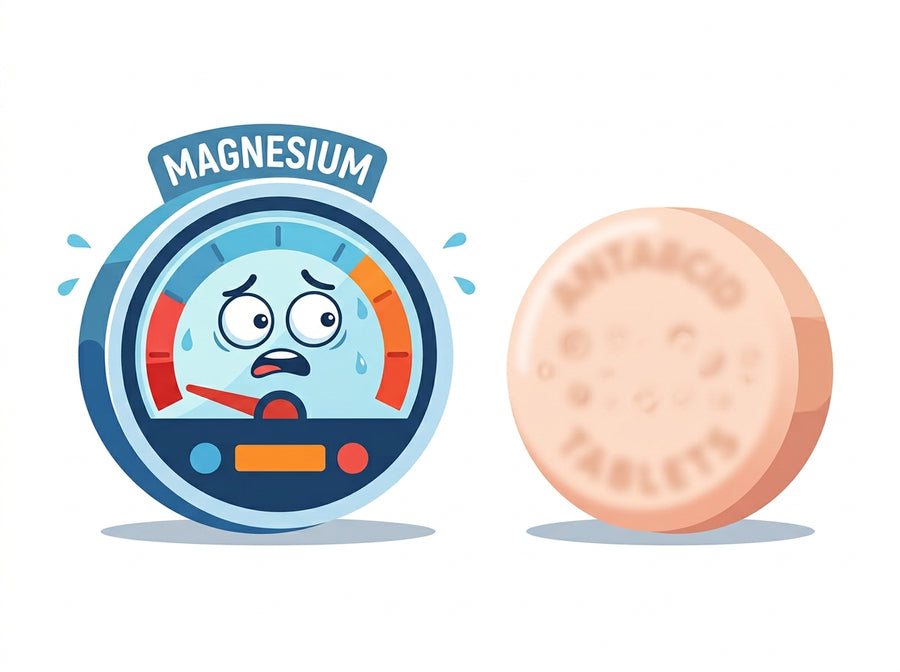
4. The pills taken for the burn are documented to run magnesium down

The pills taken for the burn are documented to run magnesium down

This is the part almost nobody behind the pharmacy counter has time to tell you. Long-term use of prescription acid reducers is documented to lower magnesium levels — the FDA published a safety communication about it in 2011. It is on the record, in plain language, and it rarely makes it into the conversation.

Sit with the shape of that for a second: the very thing taken for the burn can quietly drain the mineral the door’s muscle runs on. The longer the symptom is managed, the lower the tank can get.

To be absolutely clear: if you take a prescription acid reducer, do not stop it and do not change the dose on your own. Take this question to the clinician who prescribed it — and ask them about your magnesium while you are there.

👉 Refill What’s Being Drained

5. The magnesium you may already take was hired for a different job

The magnesium you may already take was hired for a different job
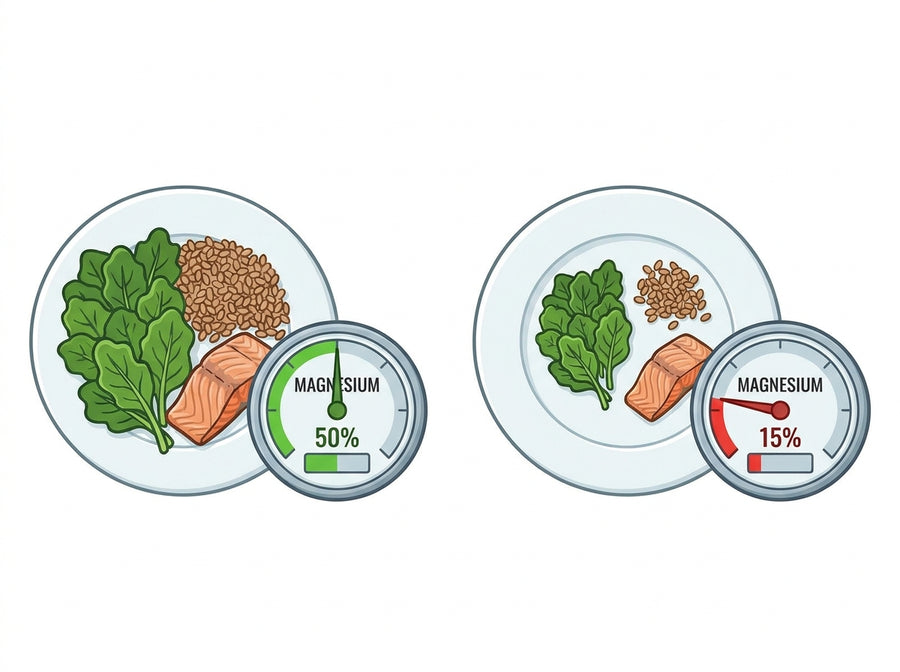
Less food, fewer minerals

Magnesium never comes on its own. It comes bound to a partner, and the partner decides what job it does.

Here is the twist most people never hear: magnesium oxide — the form in most value bottles — is itself sold as an antacid. It neutralizes on contact. Around 4% of it is absorbed; the rest does its contact job and leaves. It was never built to feed a muscle.

Go and turn your bottles around now. The supplement facts panel on the back, not the front of the label.

  • If it says oxide, you bought an antacid in a supplement bottle
  • If it says citrate, same story on absorption
  • If it just says “magnesium” with nothing behind it, that is usually oxide

So you can be “taking magnesium” for years while the muscle side of the problem never receives a delivery.

👉 See All Seven Forms On The Panel

6. Every other bottle picks one job. This one carries both.

Every other bottle picks one job. This one carries both.
Seven forms, one dose

The antacid aisle neutralizes. The blocker aisle turns down the tap. The sleep brands use glycinate because it absorbs. Nobody built one bottle for the person whose evenings burn and whose muscle has been running low for years — even though that is the same person.

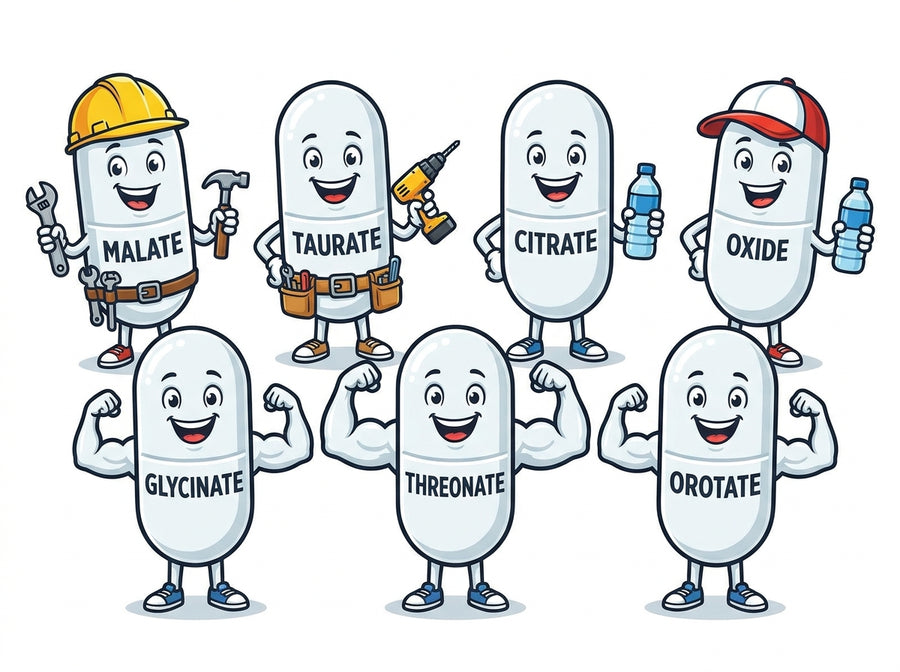
Vila Magnesium Complex carries seven forms, split across both jobs:

  • Citrate & oxide — work on contact in the stomach, the same job the antacid aisle charges for separately
  • Glycinate, malate, taurate, orotate, aspartate — absorb into circulation, where muscle can draw on them
  • Malate & taurate — sit inside the machinery muscle uses to contract and to hold

Both jobs, in the same daily dose. If you remember one thing off this page, make it that.

👉 Both Jobs, One Dose

7. Three weeks to know. Ninety days to decide.

Three weeks to know. Ninety days to decide.

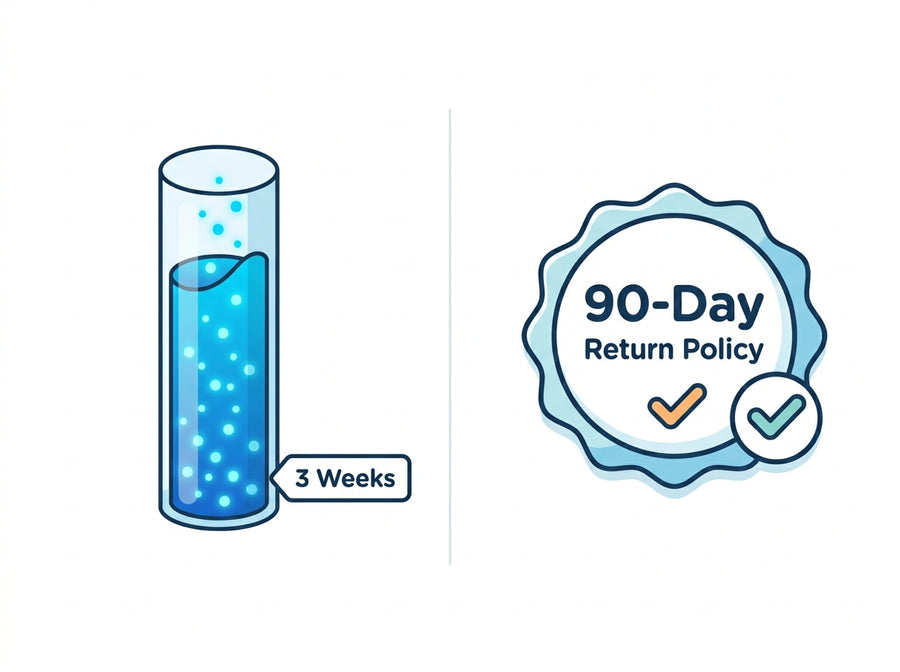
Magnesium replenishes over weeks, not overnight — you are refilling a shortfall that built over years, and a muscle running low that long does not turn around over a weekend. The usual arc:

  • Week 1 — commonly nothing to report. Keep your usual rescue tablet nearby; this is normal and it is not a failure
  • Week 2 — the occasional quiet evening
  • Week 3 — where most people say they first noticed something they trusted; for many it is a night flat on their own pillow
  • Week 5+ — fewer food rules, a tablet roll that stays in the drawer

The guarantee runs 90 days, deliberately longer than the time the product needs. So the three weeks costs you the three weeks and nothing else.

Not for urgent symptoms. Chest pain or pressure — especially spreading to an arm, neck or jaw, or with shortness of breath — is an emergency: call 911 and do not assume it is reflux. Trouble swallowing, food getting stuck, losing weight without trying, or black stools need a doctor this week, not a supplement. And never stop or change a prescribed medication without the clinician who prescribed it.

👉 Start The Three Weeks

Reaching #8 means one thing: you’re done managing the burn and you want your evenings back.

🏷️ REFLUX SUPPORT SPECIAL
Reaching #8 means one thing: you’re done managing the burn and you want your evenings back.
🎁 FREE GIFTS WITH YOUR ORDER

UP TO 50% OFF FOR A LIMITED TIME ONLY!

This limited-time deal is in high demand and stock keeps selling out.

GET 50% OFF
DEAL ENDING IN: 00:00:00
Sell-Out Risk: HighFREE shipping

Try it today with a 90-Day Money-Back Guarantee!

YES, GET 50% OFF
🏷️ REFLUX SUPPORT DISCOUNT ACTIVE